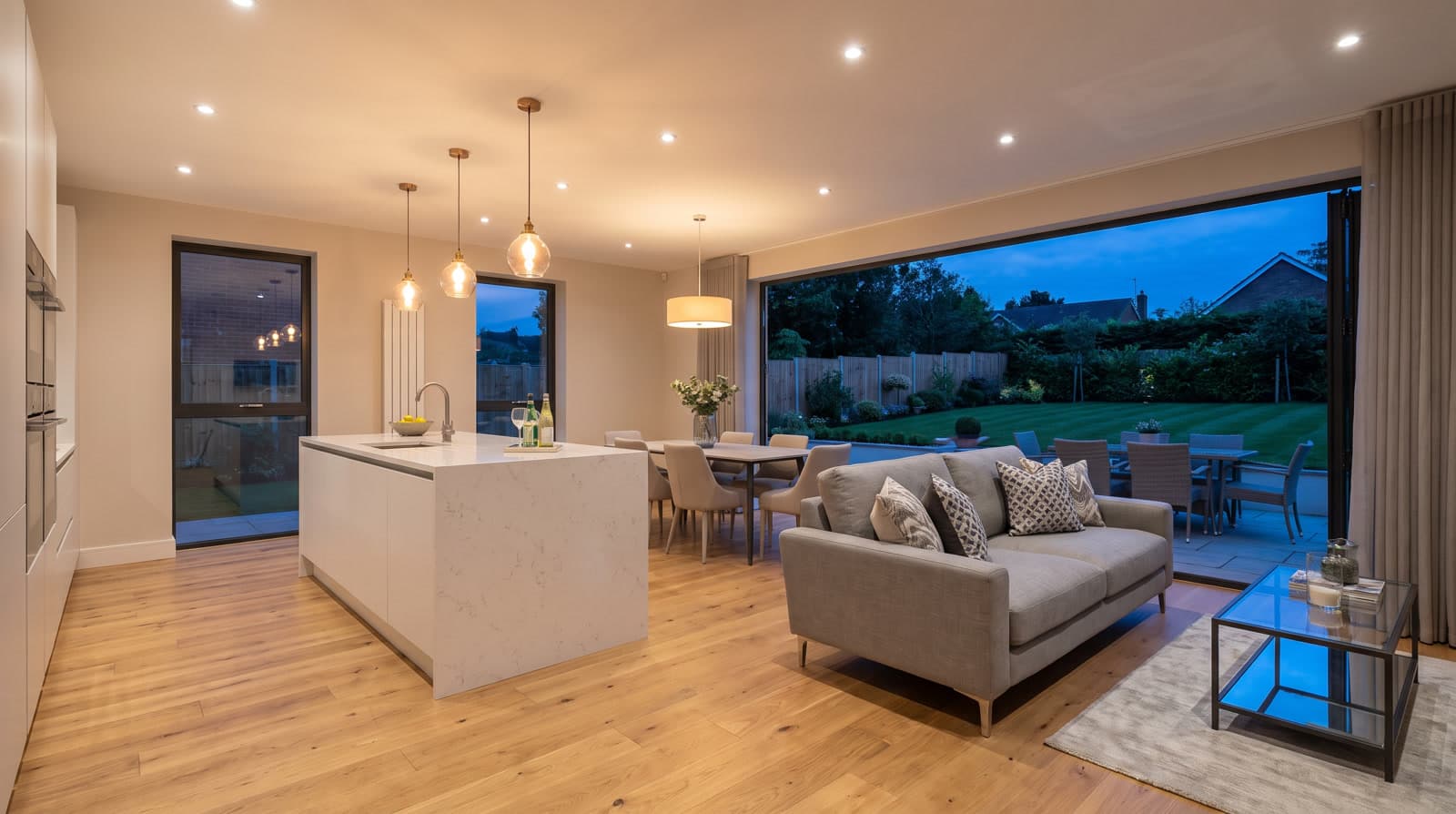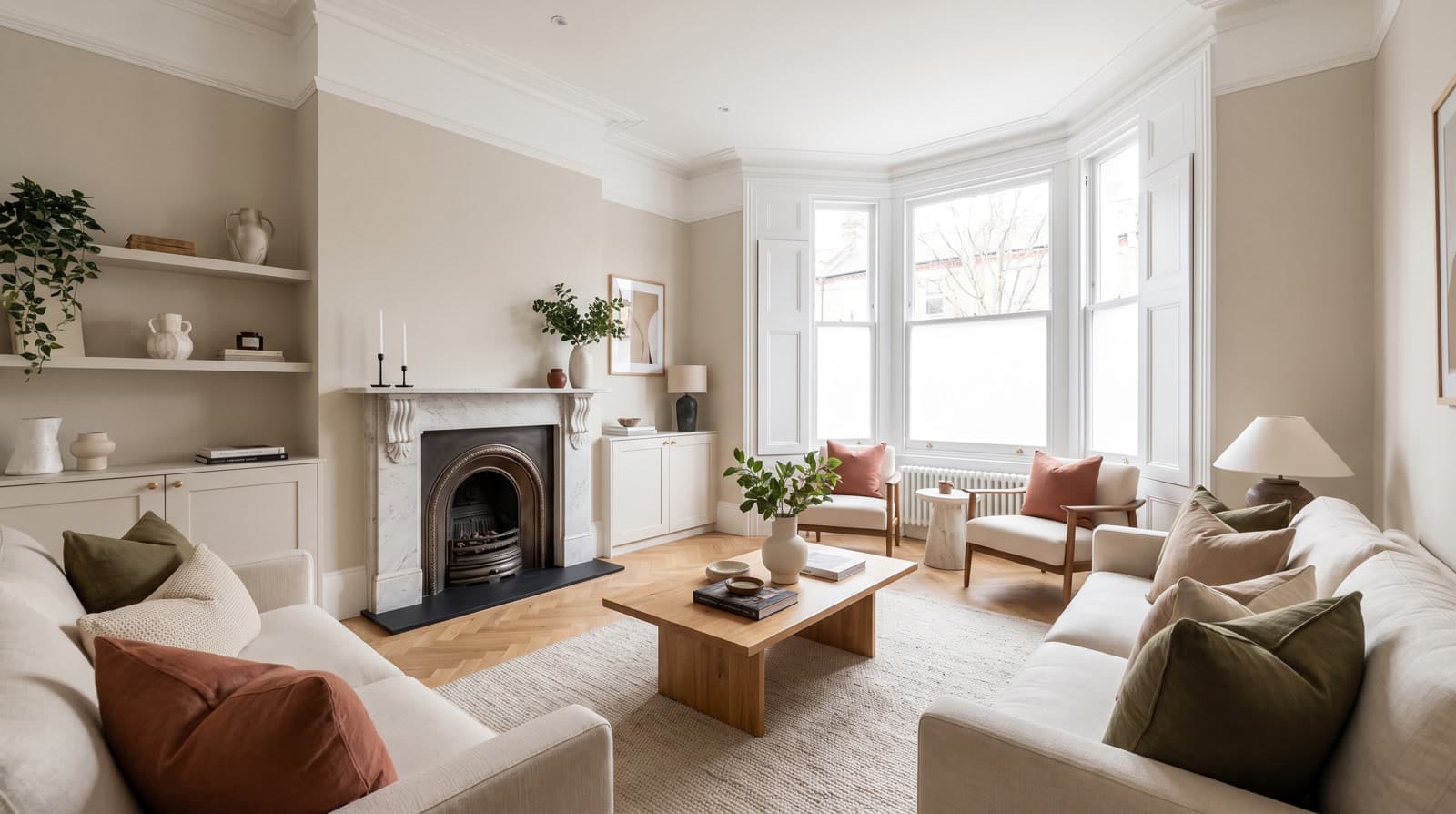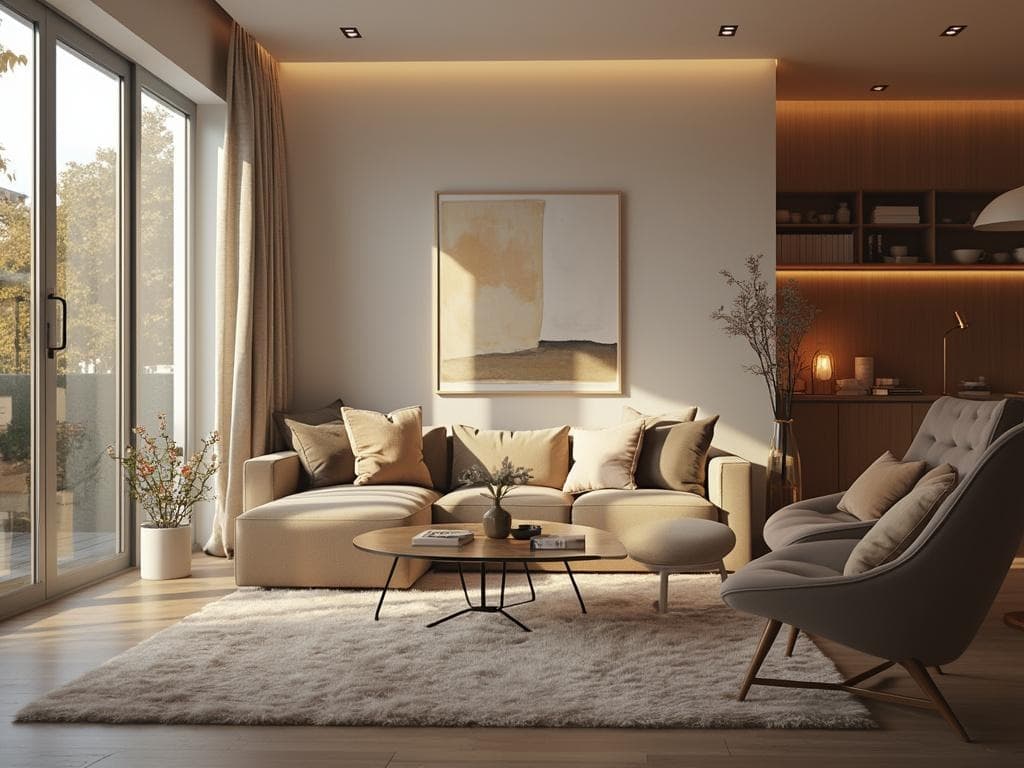
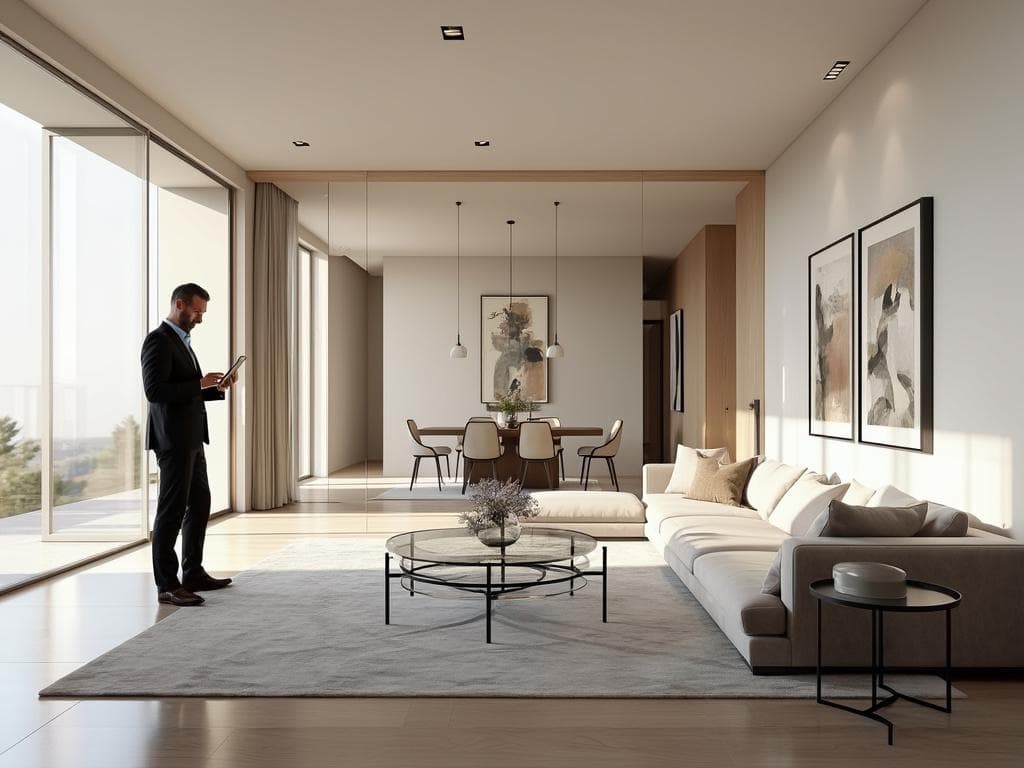
Selling a home that does not yet exist is one of the hardest jobs in property marketing. Off-plan buyers are asked to commit significant money on the strength of drawings, dimensions and promises, and many hesitate for one simple reason: they cannot picture themselves living there. AI virtual staging closes that gap by turning photographs of empty or newly finished units into warm, furnished homes that buyers can respond to emotionally.
For property developers, the appeal is straightforward. Staged images make units easier to sell earlier, support stronger pricing and cost a small fraction of dressing a physical show home. With a platform such as StageRight AI, an ordinary photograph of an empty room becomes a fully furnished image in about a minute.
What is AI virtual staging for new developments?
AI virtual staging uses artificial intelligence to add realistic furniture, lighting and decor to photographs of real rooms. The software reads the dimensions, perspective and natural light in an image, then places furnishings that sit convincingly within the space. The result looks like professional interior photography, without a single sofa being delivered.
For developers, that means the first completed unit on a scheme can do the marketing work of an entire show home. Photograph it empty, stage the images digitally, and you have aspirational material for every comparable plot on the development.
Why do off-plan buyers hesitate?
Most buyers struggle to translate a floor plan or an empty, freshly plastered room into a home. CGI renders help, but many feel generic, and buyers know they are looking at an artist's impression rather than the real thing. The emotional trigger that drives a purchase, the moment a buyer mentally moves in, rarely comes from a drawing.
Staged photographs of real, completed spaces are different. They show genuine light, genuine proportions and a believable interior, which makes the commitment feel safer. When buyers can see exactly how a bedroom, kitchen or living space works when furnished, the perceived risk of buying off-plan falls.
What are the benefits for property developers?
- Earlier reservations: listings with furnished, aspirational images attract more enquiries, which supports faster sales across a phase.
- Dramatic cost savings: dressing a physical show home costs thousands of pounds and showcases only one unit. Digital staging can be applied to every plot type for a fraction of that spend.
- Marketing at scale: every apartment or house type can go to the portals with consistent, high-quality furnished imagery rather than a mix of CGIs and empty rooms.
- Flexibility for different buyers: because the staging is digital, the same space can be presented in more than one style, helping a two-bedroom flat appeal to a first-time buyer and a downsizer alike.
- Speed: images are staged in about a minute each, so marketing can respond immediately as units complete or phases launch.
Where does AI staging fit in the off-plan sales cycle?
In the earliest phase, before anything is built, CGI remains the primary visual tool. The moment real spaces exist, AI virtual staging takes over:
- First completions: photograph the first finished unit and stage the images to market every comparable plot still under construction.
- Phase launches: stage each unit type as it completes, so no listing ever goes live showing bare, echoing rooms.
- Final units: the last few homes on a scheme often linger because they are photographed empty after the show home closes. Staged images give them the same appeal as the first release, and photo enhancement can lift older marketing shots taken during construction.
Frequently asked questions
Can AI virtual staging be used before a development is finished?
It works from photographs of real spaces, so it comes into play as soon as the first units are complete and decorated. From that point, staged photos of a genuine finished room are usually more persuasive than a render, because buyers can see the real light and proportions.
How much does it cost compared with a show home?
Fitting out a physical show home is a major line in any marketing budget, and it showcases a single unit. Plans at StageRight AI start at £29.99 a month and can cover imagery across an entire development.
Should staged images be labelled?
Yes. Good practice is to state clearly that images have been virtually staged and to avoid altering anything structural. Buyers respond well to staging when it is presented honestly as a visualisation of the finished home.
Off-plan sales reward developers who help buyers believe in the finished product early. AI virtual staging makes that belief affordable, fast and repeatable across every plot. Try the live demo on the homepage, or browse the before-and-after gallery to see what an empty unit can become.