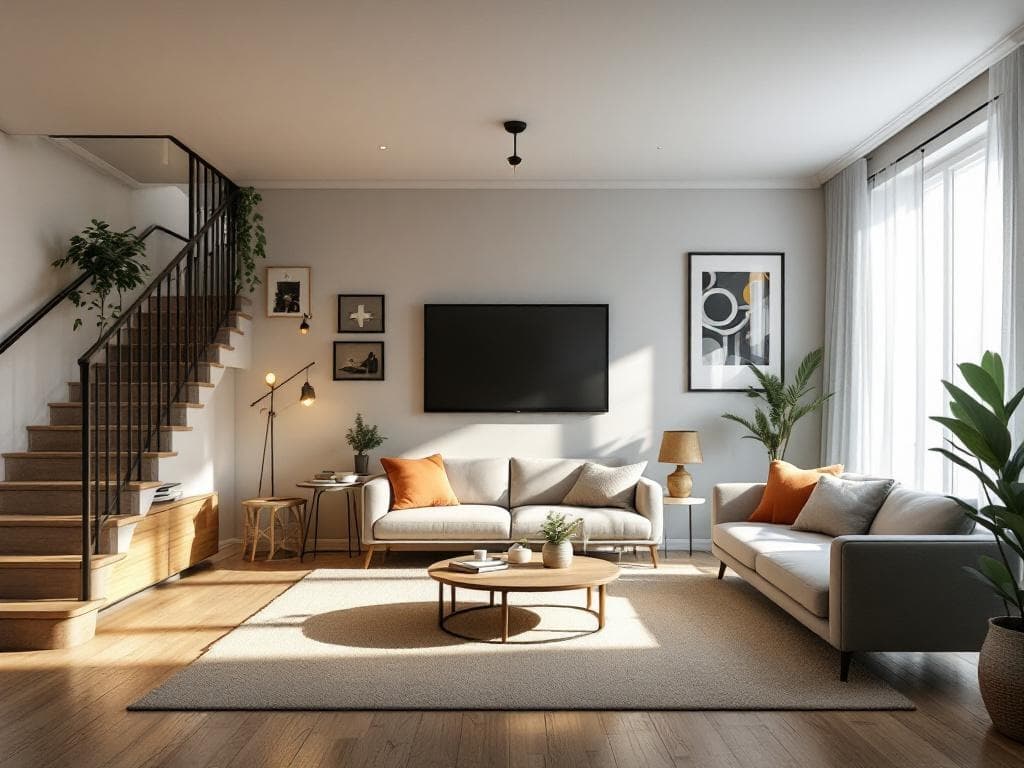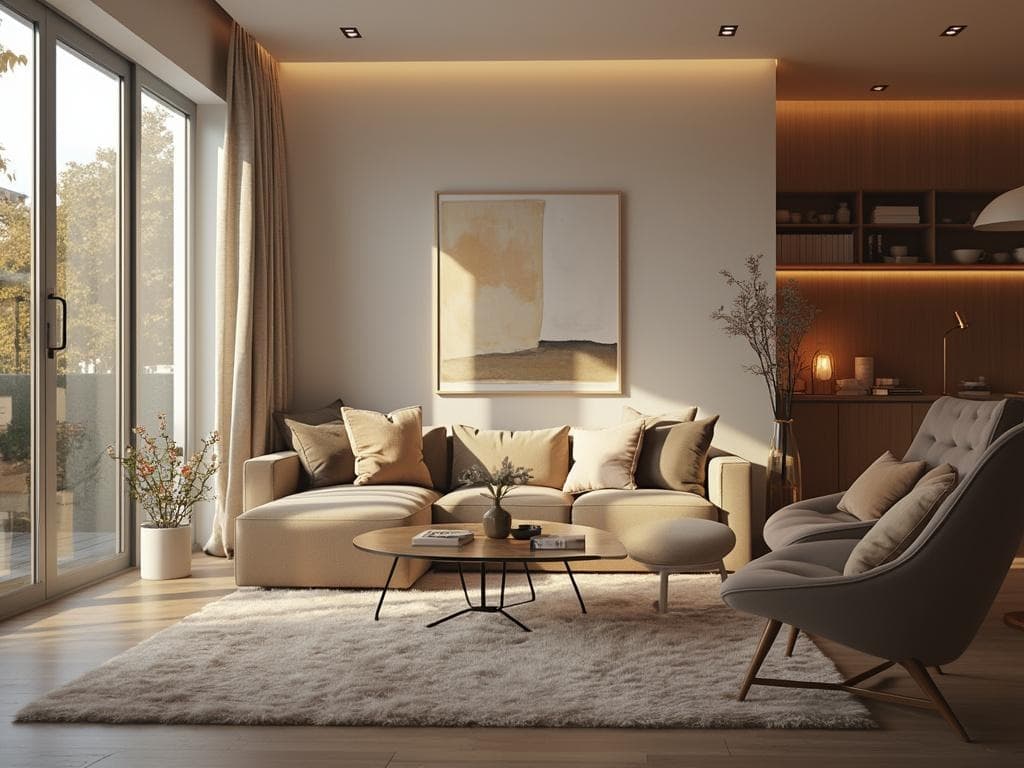
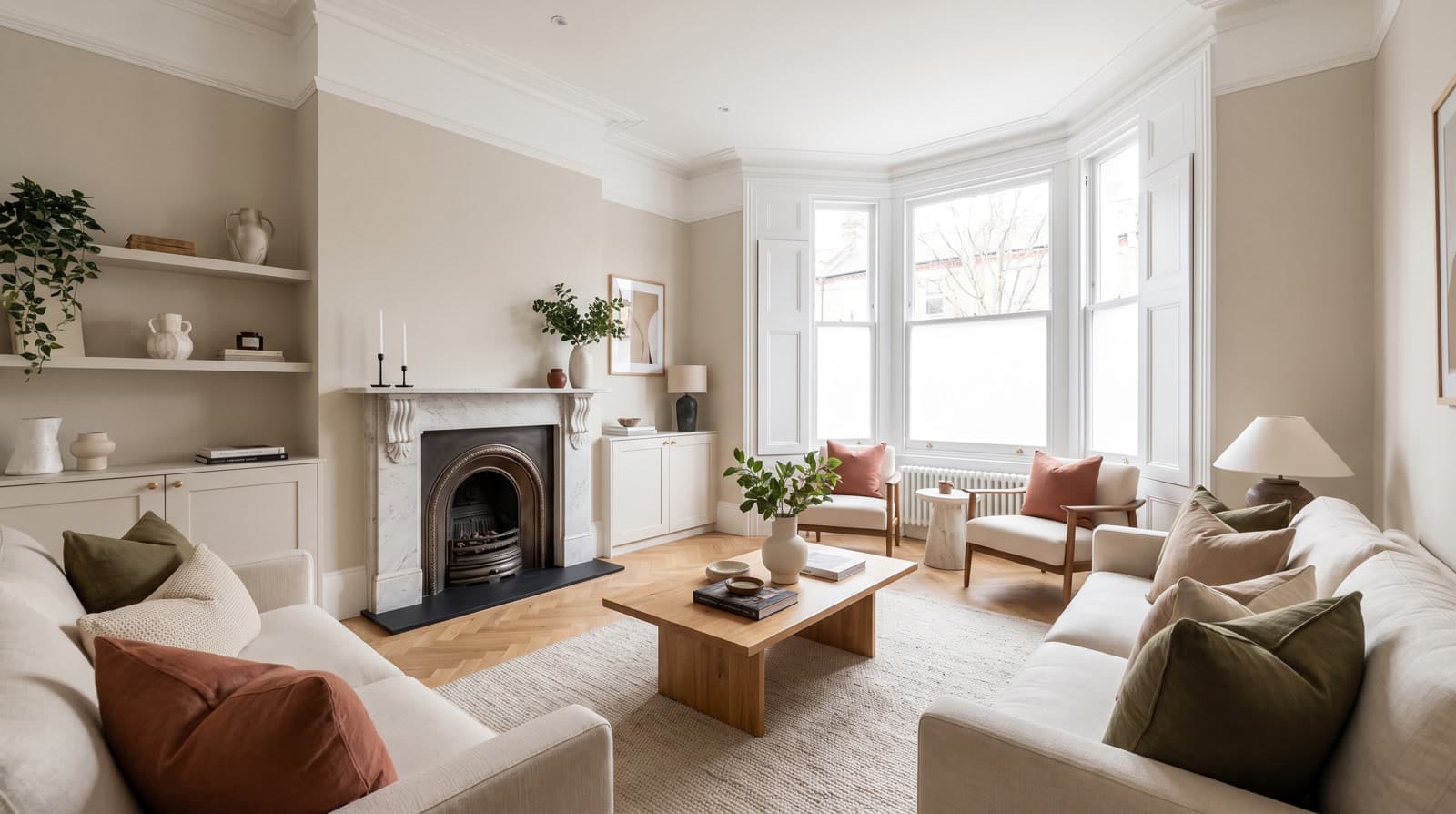
AI staging gives UK estate agents a fast, low-cost way to present every property at its best. Photorealistic furniture is added to empty rooms, clutter and unwanted items are removed from lived-in ones, and flat photography is enhanced, all generated from ordinary listing photos in about a minute. Used well, it sharpens the pitch that wins the instruction and produces the kind of portal imagery that turns casual scrollers into booked viewings. This guide explains how the technology works, where it delivers the most value, and how to use it while staying firmly on the right side of UK property marketing rules.
Why is it so hard to win listings right now?
Sellers are interviewing more agents before they instruct, and they compare marketing as closely as they compare fees. Meanwhile, buyers start almost every search online, flicking through portal results and judging a property in seconds. That combination puts real pressure on agents:
- Intense competition for stock: with many agents chasing a limited number of instructions, the marketing proposition often decides who wins, not the fee.
- Higher seller expectations: vendors want a clear, modern strategy for achieving the best price, and they can spot a tired approach instantly.
- Rising marketing costs: professional photography, physical staging and print quickly add up, especially for independent agencies.
- Hard-to-market stock: empty rooms leave buyers guessing about scale and layout, while dated or cluttered interiors put them off before a viewing is ever booked.
Physical staging solves the presentation problem, but at a price and pace that make it impractical for most listings. AI staging solves the same problem for a fraction of the cost, in minutes rather than weeks.
What is AI staging and how does it work?
AI staging uses generative artificial intelligence to analyse a photograph of a room and furnish it automatically in a chosen style. The software reads the space (walls, floors, windows, light sources and perspective) and places furniture and decor that sit naturally within it. The output is a photorealistic image created from a standard listing photo, with no photographer revisits and no furniture hire.
How does it differ from traditional virtual staging?
Virtual staging has existed for years, but it traditionally meant a graphic designer manually editing each image, which took days and carried a per-photo design fee. AI staging automates that work: an agent uploads an ordinary photo and receives a staged, photorealistic version in about a minute, with decluttering, item removal and photo enhancement handled in the same workflow.
| Approach | Cost | Turnaround | Flexibility |
|---|---|---|---|
| Physical staging | High (furniture hire, transport, labour) | Days to weeks | One style, hard to change |
| Manual virtual staging | Moderate (per-image design fees) | Days | Limited by designer availability |
| AI staging | Low (affordable subscription) | About a minute per photo | Multiple styles, easy to regenerate |
How does AI staging help agents win more instructions?
The valuation appointment is where AI staging earns its keep. Every agent tells vendors they will "present the property beautifully"; very few can prove it on the spot. We have seen the conversation change the moment a vendor looks at their own living room, staged and photo-ready.
- Show, don't tell: stage one or two of the vendor's own rooms before the appointment and present the before-and-after side by side. It is a demonstration of capability no brochure matches.
- Lead with a stronger proposition: when your marketing plan visibly outclasses the competition, the conversation shifts from fee to outcome.
- Win the difficult stock: vacant homes, probate sales and tired ex-rentals are exactly where sellers feel most stuck, and exactly where staged imagery makes the most dramatic difference.
- Protect your fee: tangible added value in the marketing gives vendors a concrete reason to choose you over a cheaper rival.
How does AI staging help secure better deals?
Once the instruction is won, presentation drives the numbers. Buyers scrolling Rightmove or Zoopla give each result a moment's attention; a warm, furnished, well-lit hero image earns the click that an empty magnolia box does not.
- Stronger first impressions: staged photos stand out in crowded portal results, which is where every enquiry begins.
- Emotional connection: buyers who can picture their life in a home move from browsing to booking far more readily than buyers left to imagine an empty shell.
- Broader appeal: the same spare room can be presented as a home office, a nursery or a guest bedroom, widening the pool of buyers who see themselves in it.
- Negotiating momentum: listings that attract interest early keep sellers in a stronger position, while stale listings invite low offers.
Which properties benefit most from AI staging?
Almost any listing photographs better with thoughtful staging, but a few categories see the biggest transformation:
- Vacant properties: empty rooms become warm, legible spaces where buyers can judge scale at a glance.
- Dated or cluttered homes: decluttering and item removal present a lived-in property in a clean, neutral way without asking the owner to change anything.
- Probate and ex-rental stock: often tired, often empty, and often priced down purely because of presentation. Staging recovers perceived value that was never really lost.
- Rentals between tenancies: for landlord clients, staged photos help attract strong applicants quickly and keep void periods short.
How do you put AI staging into practice?
The workflow slots into your existing listing process with almost no friction:
- Capture clear photos: bright, straight, well-composed shots give the AI the best starting point. Good input, great output.
- Upload to the platform: no design skills or special software needed, just the photos you already take.
- Choose a style: pick a look that suits the property and its likely buyer, from clean and contemporary to classic.
- Review the results: check scale, shadows and realism, and regenerate anything that needs a tweak.
- Label staged images: add a clear "virtually staged" caption or watermark before anything goes live.
- Publish everywhere: portals, brochures, window cards and social media all benefit from the same images.
How do you stay compliant and transparent?
UK consumer protection law requires property particulars to be accurate and not misleading, and AI staging sits comfortably within those rules when it is used honestly. The principle is simple: staging showcases potential; it must never disguise condition.
- Disclose every staged image: a discreet "virtually staged" label is standard practice and protects both you and your vendor.
- Never alter the fabric of the property: no hiding damp or cracks, no adding windows or features that do not exist.
- Keep it realistic: furnish a box room as a box room, not a palatial suite.
- Agree it with the seller: walk vendors through which images are staged before publication so expectations are aligned at viewings, where the rooms will be empty.
Frequently asked questions
How much does AI staging cost?
A fraction of the cost of physical staging, which typically runs to thousands of pounds for a whole home once furniture hire, transport and labour are counted. With StageRight, plans start at £29.99 a month, which makes staging every listing viable rather than reserving it for premium stock.
Do buyers object to virtually staged photos?
Not when they are clearly disclosed. Buyers understand the furniture is illustrative, and most appreciate imagery that helps them judge scale and imagine the space in use. Problems only arise when staging is hidden or used to mask defects, which is exactly what proper labelling prevents.
How long does AI staging take?
About a minute per photo, from upload to finished image. A whole property can be staged in the time it takes to make a coffee, which means even a listing going live this afternoon can carry fully staged photography.
The bottom line
AI staging is moving from novelty to expectation, just as professional photography did before it. Agents who adopt it now walk into valuations with a visibly stronger proposition, win more of the instructions they pitch for, and give every listing the presentation that earns better offers. You can see it working on a property photo right now: try the live demo on the StageRight AI homepage and picture your hardest listing at its best.