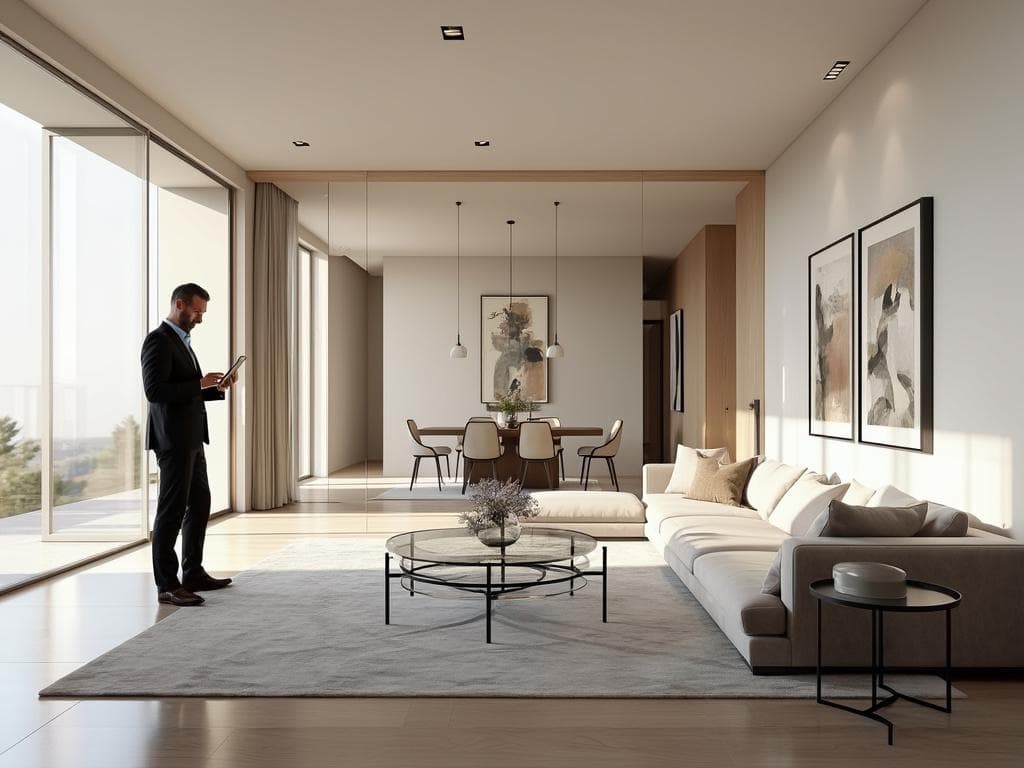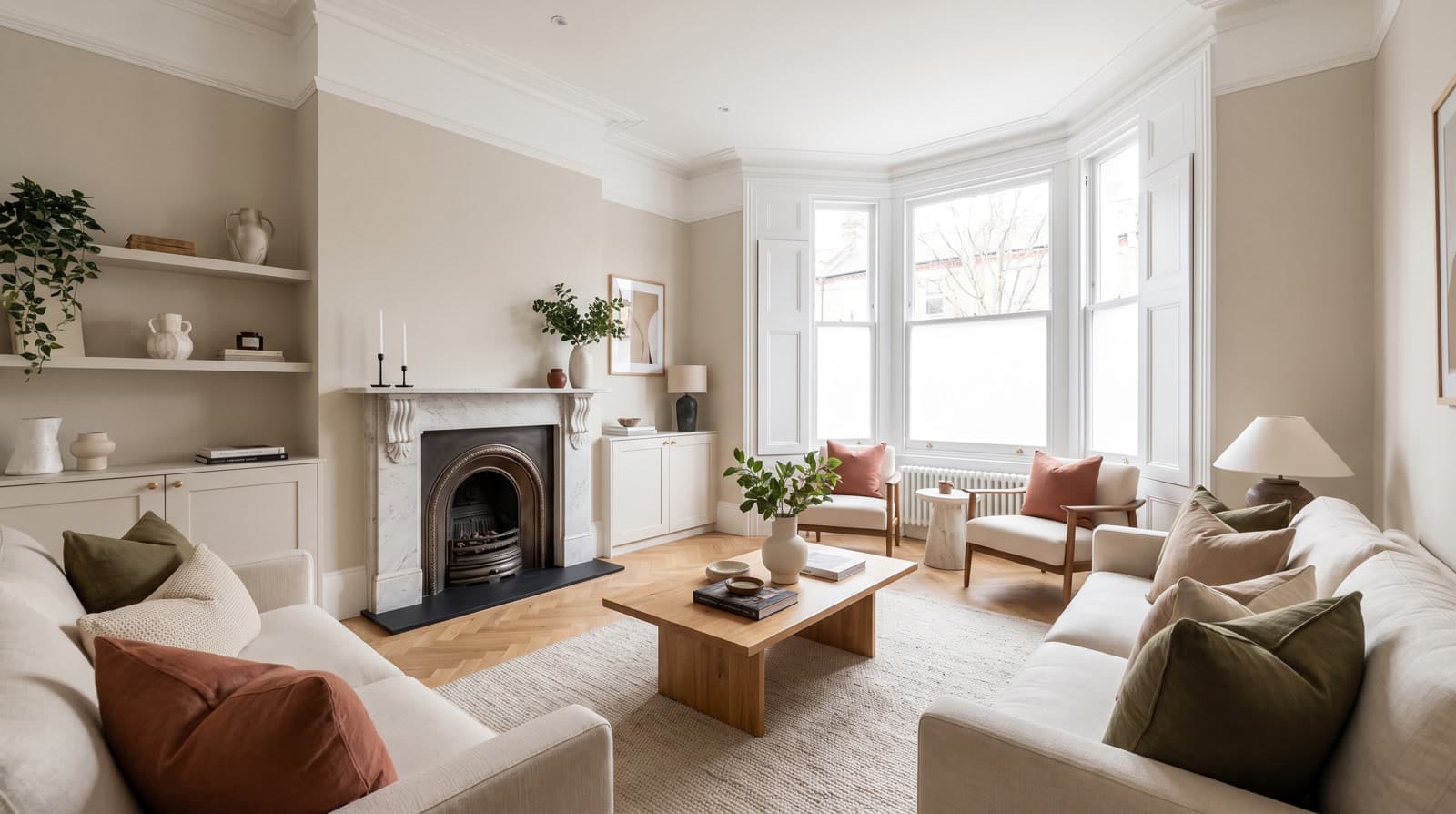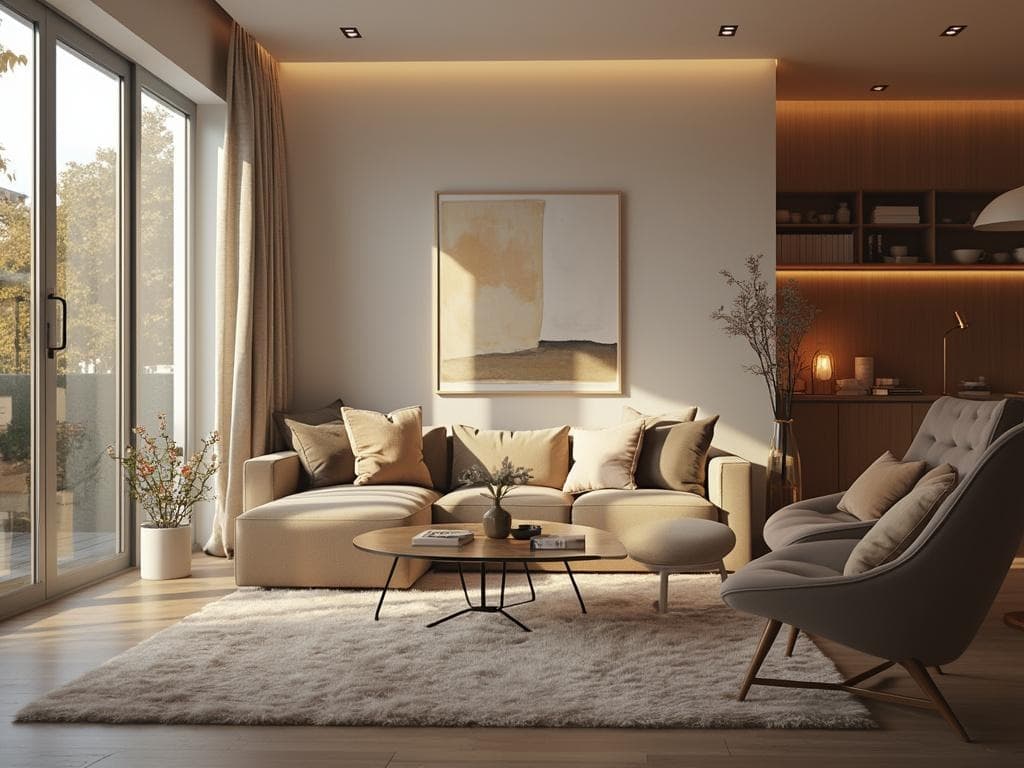
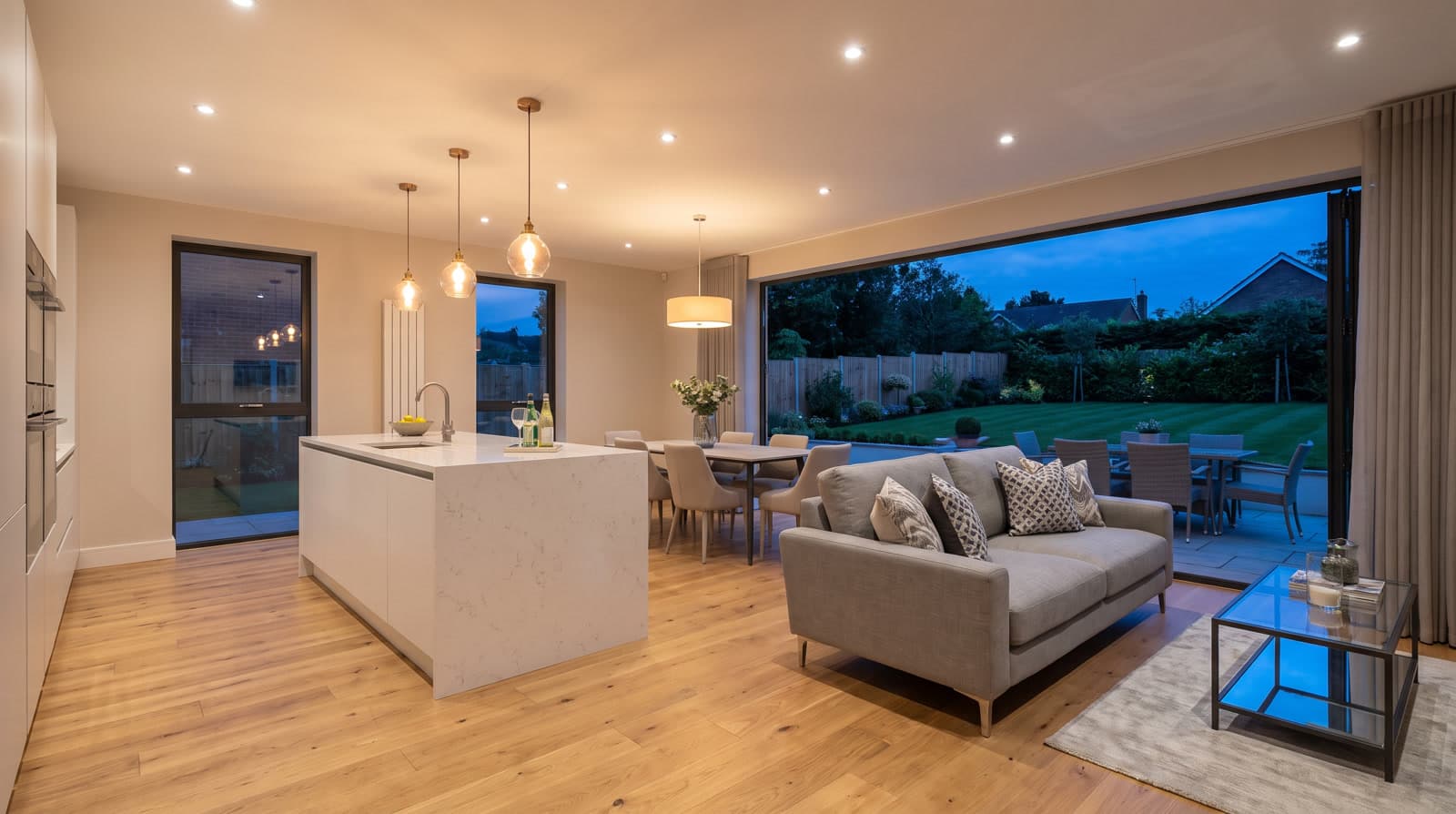
Every week an empty unit sits unsold, it costs a developer money in finance, maintenance and marketing. AI virtual staging attacks the core problem: buyers struggle to fall for a bare shell. By digitally furnishing photographs of empty homes, in about a minute per image, developers can present every plot as a warm, finished living space without hiring a single sofa. At StageRight AI we built our platform around exactly this workflow, and it has changed how developments are marketed online.
What is AI virtual staging?
AI virtual staging is the digital furnishing of real property photographs. You photograph an empty room, the AI analyses the space, and it returns a photorealistic image of the same room fitted with suitable furniture, lighting and decor. Nothing changes in the physical unit; what changes is how buyers see it on the portals, on your development website and across social media. For developers holding multiple identical or near-identical units, that shift in presentation applies across the whole phase at almost no marginal cost.
How does the process work?
- Photograph the finished unit. Ordinary photos of the empty rooms are all the AI needs.
- Upload and choose a style. The AI reads the room's dimensions, light and features, then furnishes it in the interior style you select.
- Download in about a minute. The staged image comes back ready for portals, brochures and social campaigns.
- Label and publish. Mark the images as virtually staged, in line with UK best practice on honest marketing, and push them live.
There are no consultations, delivery slots or hire contracts in that sequence, which is precisely why the approach suits development timescales. The day a plot reaches practical completion and gets photographed, it can be marketed fully furnished.
Why do property developers use virtual staging?
- Cost control across many units. Physically furnishing multiple plots means hire contracts that commonly run to thousands of pounds each over a sales period. Virtual staging replaces that with a low software subscription.
- Speed to market. Staged images in about a minute per photo mean no gap between completion and compelling marketing.
- Consistency across a phase. Every plot presents to the same standard, styled coherently with the development's brand.
- A style for every buyer. The same two-bedroom apartment can be staged for young professionals, downsizers or investors, from one set of photographs.
- Stronger digital campaigns. Furnished imagery gives portals, email campaigns and social media adverts something buyers actually stop for.
Where does it fit in a development's sales cycle?
Virtual staging earns its place at several points. Early on, once the first units are complete and photographed, it lets marketing begin at full strength before any show home opens. Mid-cycle, it keeps every unfurnished plot competitive alongside the dressed show home. And late in the cycle, when the show home has been sold or dismantled, it keeps the remaining units presenting beautifully right through to the final completion. Developers can also refresh the styling of slower-moving plots to retarget a different buyer profile without any physical work.
Does virtual staging replace the show home?
No, and it does not need to. A physical show home remains a powerful selling tool: buyers can walk through it, touch the finishes and linger in the rooms. The economics only support one or two of them per development, though. The practical model we see working is a hybrid: one physical show home as the flagship experience, with virtual staging carrying the online presentation of every other plot. Buyers arrive at the viewing already emotionally invested, because the unit they enquired about looked like a home rather than a shell.
Keep it honest: label staged images
UK marketing rules require property advertising not to mislead, and the sensible convention is well established: caption virtually staged images clearly and keep the original photos available. Buyers respond well to it in practice; the staged image shows the potential, the empty room confirms the canvas. Transparency protects the developer's brand and keeps viewings productive.
Frequently asked questions
How long does AI virtual staging take?
About a minute per photo from upload to staged image. A complete unit can be staged in the time it takes to make a coffee, and a whole phase within a morning.
How much does it cost compared with furnishing a unit?
Physically furnishing a single unit for sale commonly costs thousands of pounds over a sales period once hire, delivery and installation are counted. StageRight AI plans start at £29.99 a month and cover staging across an entire development.
Can buyers tell the images are virtually staged?
Modern AI staging is photorealistic, so the honest answer is: not unless you tell them, which is exactly why you should. Clear labelling keeps the marketing compliant and buyer expectations accurate.
For developers, the equation is straightforward: empty units sell on imagination, staged units sell on emotion. AI virtual staging delivers that emotion for every plot, in minutes, at software prices. Try it on one of your own photos with the live demo on our homepage.